What the Sea-Day Ratio Is Actually Telling You
- Vega Mare
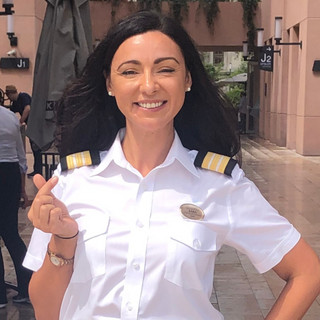
- Mar 16
- 4 min read
Updated: Mar 17
Most people planning a cruise read the port list. They count the destinations, check the arrival times, look up what there is to do ashore. What very few people look at is the number in between: the days the ship does not stop anywhere at all.
That number tells you more about the voyage you are about to have than almost anything else in the itinerary.
What a Sea Day Actually Is
A sea day is not a rest day, though it can be. It is not a lesser day, though some passengers treat it that way until they have had one. It is a day the ship has to itself. No port schedule, no tender queues, no buses loading in the early morning. Just the ocean, the deck, and whatever the ship makes of the hours between sunrise and dinner.
On a well-run ship, sea days are where the character of the voyage reveals itself. The entertainment program stretches. The pool fills. The dining room relaxes into a longer rhythm. Conversations start at breakfast and continue somewhere else entirely by afternoon. People who nodded at each other in the corridor on day one are on first-name terms by the end of a sea day.
For some travelers this is the point. For others it is the part they are quietly dreading. Both reactions are reasonable. What matters is knowing which one is yours before you book.
A sea day is not a gap in the itinerary. It is the itinerary's character showing through. How you feel about them is one of the most useful things you can know about yourself as a traveler.
What the Ratio Does to the Crowd
The balance between sea days and port days does not just shape your schedule. It shapes who boards.
Port-heavy itineraries draw active travelers. People who want every day ashore to count, who have researched the markets and the viewpoints and the restaurant that does not take reservations but is worth the queue. They tend to run younger, or at least more energetically. The bars stay open later because the day does not end when the ship leaves port. It continues.
Sea-day-heavy itineraries pull in a different direction. Travelers who genuinely want the rhythm of the ocean. Earlier evenings. Longer lunches. A pace that does not ask anything of you unless you ask it of yourself. Crossings and world cruise segments sit at this end of the spectrum, and the crowd they attract is calibrated accordingly.
A fourteen-night Hawaii loop with ten sea days and four ports is a slow, considered waltz. A fourteen-night Mediterranean run with ports most days and two sea days is a different proposition entirely. Same length on paper. Different voyage in practice. Different neighbors at dinner.
The Number That Changes the Ship
There is a threshold worth knowing about. When sea days stack, the activities roster expands to fill them. Lectures, craft circles, sports competitions, longer trivia leagues. The ship builds a social itinerary because the calendar has room for one.
This changes the kind of friendship that forms on board. Port-heavy runs produce the fast warmth of shared experience, a day in Dubrovnik, a tender in Kotor, a glass of wine at the end of it. Sea-day-heavy runs produce something slower and sturdier. Friendships built over puzzles and quizzes and the third cup of tea. Some travelers find one kind of connection more natural than the other. It is worth knowing which you are.
It also changes the volume. On a well-run ship with a sea-day-heavy schedule, the entertainment director has the lounge bands rehearsing a classics-forward set weeks in advance. Bars trade midnight bustle for an afternoon crowd. The ship does not go quiet. It just keeps different hours.
Port days bring shared stories. Sea days build the kind of familiarity that takes longer to form and longer to forget.
How to Read an Itinerary Before You Book
Pull up the itinerary and count the sea days. Then ask what the ratio is telling you.
More than a third sea days and you are looking at a voyage with a crossing temperament, whatever the destination. The pace will be slower, the crowd older on average, the evenings earlier. If that is what you are after, you have found it. If you were expecting something more active, the itinerary was always going to disappoint you.
Fewer than two sea days in a ten-night sailing and the ship barely has time to find its rhythm between ports. That suits travelers who want every day to mean somewhere new. It does not suit travelers who need the ship itself to be the experience.
The sweet spot for most people planning a first longer sailing is somewhere in the middle: enough port days to feel like the world is moving past the window, enough sea days to remember you are actually at sea.
Going Deeper
How sea-day ratio intersects with itinerary length, passenger mix, and season to shape what you actually experience on board is covered in full in The Discerning Voyager, written for people who want to understand the decision before they make it.
Vega Mare is a former senior cruise ship officer and the author of Inside the Floating City and The Discerning Voyager. If you are planning a sailing and want to understand what the itinerary is actually offering before you commit, a strategy session is the place to start.

Comments