Why Your Ship Might Dock an Hour From the City
- Vega Mare
- Mar 24
- 4 min read
You have spent months planning a port day. You know the restaurant you want to find, the market that opens early, the viewpoint that requires a taxi and a little local knowledge. The ship docks at seven. By eight you want to be moving.
What the itinerary does not tell you is where, exactly, the ship will be docking.
Not the city. The berth. And on a large ship, those two things are not always the same place.
The Distance Nobody Mentions
Cruise itineraries list destinations. They do not list berths. The port name on your booking confirmation is the city the line is selling you. Where the ship actually ties up is an operational decision made weeks or months in advance, shaped by factors that have nothing to do with how close you wanted to be to the old town.
The signals are there if you know how to read them. A port listed as Athens/Piraeus is telling you something. Kuala Lumpur (Port Klang) is telling you something. The backslash and the parentheses are not fine print. They are a distance measurement in disguise. The city and the pier are not the same place, and the gap between them will shape your entire day ashore before you have even decided what to do with it.
On some itineraries that distance is a short walk. On others it is a shuttle bus, a transfer, and forty minutes before you have cleared the port gate. The difference between those two experiences is not visible anywhere in the marketing material.
The backslash and the parentheses in a port name are not fine print. They are a distance measurement in disguise.
Why Large Ships Dock Further Away
Ship size is the primary reason a pier ends up far from the city, and it is worth understanding the mechanics before you book.
Large ships need deep water, long pier faces, and turning room. The berths that can accommodate them are almost always cargo terminals or purpose-built cruise facilities built at the edge of the port, where the infrastructure exists to handle the scale. These berths are functional and well-organised. They are rarely central.
Smaller ships, usually those carrying fewer than seven hundred guests, can use piers that larger vessels cannot get near. A boutique ship in Malaga can tie up close to the old city walls. The same itinerary on a large mainstream vessel means a shuttle and a queue. Same destination on the brochure. Measurably different morning in practice.
This is not a flaw in the large ship experience. It is simply a physical reality that the booking process rarely makes explicit, and that shapes the day ashore in ways worth understanding before you commit to a particular vessel on a particular route.
The Transfer Nobody Budgets For
There is a version of this problem that catches people more than any other, and it is the port that requires a transfer.
The ship docks at a cargo terminal. A shuttle runs to the city center, timed to the ship's schedule, and shared with everyone else on board who had the same idea about leaving at eight. The queue for the shuttle is its own event. By the time you reach the city it is closer to ten, the morning light has changed, and the restaurant that opens early has moved on to its lunch service.
On a first call, this transfer may not have been fully tested at scale before your sailing. The shuttle company is new to the volume. The timings are optimistic. The day you planned around an nine o'clock start is quietly reorganizing itself around an eleven o'clock reality.
Building margin into a port day is always sensible. On a large ship making a first call at a berth outside the city, it is not optional.
How to Read the Itinerary Before You Book
Pull up the port list and look for the signals.
A backslash means two names for a reason. Athens is not Piraeus. Livorno is not Florence. Civitavecchia is not Rome. The distance between the name on the brochure and the place the ship actually stops can be anywhere from twenty minutes to ninety, and it will determine whether your day ashore is the one you planned or a compressed version of it.
Research the berth, not just the destination. Cruise line port pages and independent port guides will tell you where ships of your size typically dock and how long the transfer runs. That information is available. It is simply not in the place most people look for it.
And if the port is the reason you are on the sailing, if it is the day you have been planning around, choose the ship with that in mind. A smaller vessel that can dock closer to the city will give you more of the day you came for than a larger one that cannot.
If the port is the reason you booked the sailing, the berth is the first thing worth checking. The itinerary lists where the ship is going. It does not tell you how close it will actually get.
Going Deeper
How berth distance, ship size, and port logistics interact to shape your day ashore is covered in The Discerning Voyager, alongside the full framework for reading an itinerary the way a senior officer would before committing to a sailing.
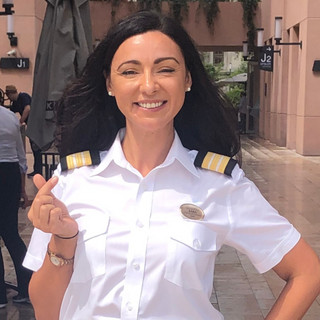
Vega Mare is a former senior cruise ship officer and the author of Inside the Floating City and The Discerning Voyager. If you are planning a significant voyage and want to understand what the itinerary is actually offering before you commit, a strategy session is the place to start.


Comments