Mediterranean Cruises With an Elderly Parent: Heat, Itinerary Structure, and the Questions Worth Asking First
- Vega Mare
- Mar 4
- 6 min read
Updated: Mar 17
The question comes up often. Someone wants to take a parent on a Mediterranean cruise in the summer. The destination feels right. The timing works. Then, it dawns on them, that their mother or father doesn't do well in the heat.
The standard response is to choose a cooler port city. Lisbon over Santorini. Barcelona over Naples. That advice has some merit, but it addresses only one layer of the problem, and for someone with genuine heat sensitivity, the layers it leaves out tend to be the ones that matter most.
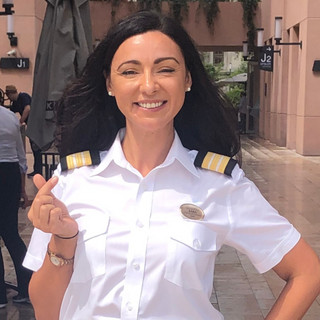
I spent years in senior officer roles at sea, including Mediterranean summer sailings. What I watched passengers struggle with wasn't usually the destination they had chosen. It was the operational structure of the trip they hadn't known to examine before they boarded.
How the Ship Gets You Ashore Matters More Than You'd Expect
A significant number of the most popular Mediterranean ports in July do not allow the ship to dock directly. Some require tendering, where the ship anchors offshore and passengers board small boats to reach the dock. Others use organized shuttle buses that run between a remote pier and the town center. Both add time, queuing, and sun exposure before you have even started the day ashore.
I have worked those tender operations as a senior officer. On a July afternoon in the Mediterranean, the heat on an open deck or a sun-exposed pier is considerable even for passengers in good health. For a 70-year-old managing heat sensitivity, it is not a minor inconvenience. It can ruin a port day or, if it happens repeatedly across a sailing, quietly derail the trip.
Santorini, Kotor, Florence, Monaco. These ports appear on summer itineraries because they are genuinely beautiful. They are also among the most consistently tender-heavy in the region. Several others involve shuttle arrangements that add a similar physical burden. That combination is worth understanding before the booking is made, not after.
When heat tolerance is part of the equation, how the ship gets you ashore is not optional information. It belongs at the top of the list.
Ship Arrival Times Shape the Entire Day Ashore
The second variable most people don't know to check is what time the ship actually arrives.
An 8am docking gives you the cooler morning hours. The streets are quieter, the light is good, and the temperature is workable. A ship that arrives at 11am or noon delivers passengers directly into the middle of the day, when the heat in Southern Europe in July is at its most demanding. For someone who struggles in those conditions, the difference between those two arrival windows isn't cosmetic. It determines the quality of every hour spent ashore.
Arrival times are rarely prominent in the brochure. They are buried in the detailed itinerary, and they vary considerably between sailings. Two itineraries visiting the same port in the same month can have arrival windows hours apart. That gap is the difference between a productive morning and a day spent looking for shade.
When heat is a factor, arrival time is part of the structural decision.
Ship Size Changes the Physical Reality of Every Day on Board
Larger ships offer more in almost every category. More dining, more entertainment, more variety. For many passengers that is a genuine draw. But there is a trade-off the marketing doesn't highlight: larger ships mean considerably longer walking distances between cabin, dining venues, pool decks, and anywhere else you need to be.
On a hot day, with a full ship and busy corridors, what looks like a short walk on a deck plan accumulates into something more taxing. For a passenger already managing energy and heat, the physical load of daily life on a large ship is worth factoring in before the itinerary becomes the focus.
A mid-size ship reduces that friction significantly. Distances are shorter, the pace is calmer, and the overall effort required just to move through the day is lower. That's not a minor consideration when comfort is the priority.
Shoulder Season Is Worth Taking Seriously
If the Mediterranean is the right answer and there is any flexibility on timing, May and late September - early October are worth genuine consideration.
The same ports. The same food. The same culture. Temperatures in the low 20s Celsius rather than the mid-30s. Crowds that are noticeably lighter, which simplifies logistics at every stage.
I have spoken with passengers in July who described ports they had visited in May as overcrowded and exhausting, without recognizing that the month had done most of the damage. The destination was the same. The conditions were entirely different.
For a parent who doesn't tolerate heat well, May in the Mediterranean is not a lesser version of the trip. In most respects, it is the more considered one.
If you are already weighing a specific sailing and want to check the structural details before you commit, a focused strategy review can work through these questions with you.
Itinerary Rhythm Matters as Much as the Destination List
Consecutive port days look impressive on paper. In practice they are physically demanding, even for passengers in good health. For someone managing reduced stamina or heat sensitivity, back-to-back port days with long shore time can transform an itinerary that reads as exciting into one that feels relentless by day four.
Sea days are recovery time. They are what allows passengers to arrive at each port with genuine energy rather than working through accumulated fatigue. A well-structured itinerary builds them in deliberately. Three ports followed by a sea day is a materially different experience than five consecutive ports with no break in between.
When reviewing an itinerary, the rhythm deserves as much attention as the destination list.
What the Question Is Really Asking
When someone asks which Mediterranean port city stays cool enough for an elderly parent in July, the underlying question is usually simpler: how do I make sure this trip actually works?
A well-chosen destination can still produce a difficult trip if the operational details work against the passenger. That gap between what looks right on paper and what functions well in practice is where most cruise regret originates, and it is rarely visible from the brochure.
A Practical Starting Point
Before committing to a sailing, these are the questions worth working through:
• Which ports on this itinerary require tendering and shuttles? Is there a comparable sailing where those ports are docked?
• What time does the ship arrive at each port? Is there meaningful time ashore before the heat of the day peaks?
• What is the passenger capacity of this ship, and what does that mean for walking distances and daily physical load?
• Does the itinerary include sea days distributed across the sailing, or is it predominantly port-heavy?
• Is July fixed, or is there room to consider May or early October?
None of these answers appear in the brochure, but most are findable with enough time. The harder part is knowing what you're looking at. Arrival windows, tender frequency, shuttle logistics, walking distances on a specific ship at full capacity - these details only reveal their significance after sailing the same routes repeatedly, across different seasons and different ships. That's what turns information into a judgment call. Working through it before you book is the difference between a trip that holds up and one that requires constant managing.
Vega Mare is a former senior cruise ship officer and the author of Inside the Floating City and The Discerning Voyager. If you are planning your first significant cruise, or reconsidering one after a difficult experience, a strategy session will help you choose the right itinerary for where you actually are, not where the brochure suggests you should be.


Comments