What do cruise ship crew do when they're not working?
- Vega Mare
- Mar 16
- 4 min read
Updated: Mar 17
There is a triangle that everyone who works at sea eventually learns to navigate. Three things: sleep, social life, work. The rule is simple and merciless. You get two. Never all three.
Pick work and social life and you will be good at your job and well liked below deck, but you will arrive at the end of a contract hollow-eyed and running on something that stopped being sleep a long time ago. Pick sleep and work and you will be rested and functional but the months will pass in a kind of tunnel, just your cabin and your duties and nothing in between. Most people, especially early in their careers, pick work and social. Youth is generous with its reserves, until it suddenly isn't.
The Triangle Nobody Tells You About
That is the honest answer to the question. What crew do when they are not working is: they negotiate. Every free hour is a small calculation. How many hours until my next watch? Is this a sea day or a port day? Do I sleep now, or do I go?
Crew parties start early, but the bar does not fill until 11pm, when the last departments clock off and the corridor outside suddenly has footsteps in it. If you have a 5am watch, you do the math. Most nights, you go anyway.
The Institution Nobody Schedules
On sea days, the ship runs on an unofficial arrangement that no one puts in writing but everyone observes. Between 2pm and 4pm, you do not call anyone who does not have to be somewhere. You do not schedule anything that does not need to exist. Whoever decided to put a passenger event in that window has made enemies in every department, and those enemies have long memories.
The nap between 2pm and 4pm is not in any schedule. But call someone during those hours on a sea day and you will stay on their mind for the wrong reasons.
Port Days, Port Manning, and the Laundry Problem
Port days are when the calculation tips the other way. Except when it doesn't, because there is one more variable the triangle doesn't account for: port manning. When the ship is in port, a skeleton crew has to stay on board to keep essential systems running. That duty rotates, and when it falls on your day off, your grand shore adventure is your cabin, a washing machine, and the sound of everyone else's footsteps heading down the gangway without you.
Assuming you are free to go, the calculation tips hard. Alaska is docked outside your porthole with salmon, king crab, and scenery that nature is only offering you that one day. New Zealand has Hobbiton an hour and a half inland. You are not taking a nap. You go, you rush back at four, eat something fast, and somehow start your evening shift wide awake. The ship does that. The energy of the place has no respect for how tired you are supposed to be.
What This Life Produces
I tell you this because the people looking after your experience are human beings managing the same impossible triangle, in the same windowless corridor, on the same restless sea.
The ones who last are the ones who have made a kind of peace with it. Not by choosing rest over living, but by learning to read the calculation quickly and trust it. They know when Alaska is worth the fumes and when Lisbon can wait. They have done it hundreds of times.
The ones who are genuinely good at this life, the senior crew who have been doing it for a decade or more, tend to be remarkably good at making fast, clear decisions about what deserves their time and what does not. Fifteen years of operating under pressure with limited room for error produces a reliable instinct for when something matters and when it only looks like it does. That instinct does not stay below deck when the contract ends.
The people who stay in this life are not there because they have no alternatives. They are there because something about it holds them. That, too, is part of what you experience when you sail.
If you want to understand that world more honestly, Inside the Floating City goes considerably deeper. It is where the triangle lives in full, alongside everything else that runs beneath the waterline of a ship's daily life. And when someone who has lived that triangle sits down to help you plan a sailing, they are not working from a brochure. They are working from something that took considerably longer to earn.
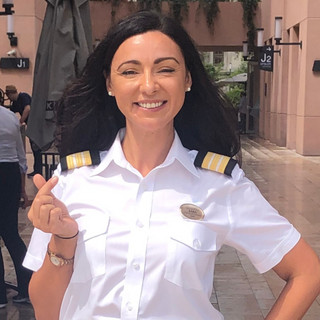
Vega Mare is a former senior cruise ship officer and the author of Inside the Floating City and The Discerning Voyager. If you are planning a significant voyage and want to understand the ships and the lines at a level no brochure will give you, a strategy session is the place to start.

Comments