The Ship Size Question Is Usually the Wrong Question
- Vega Mare
- Feb 26
- 3 min read
Updated: Mar 17
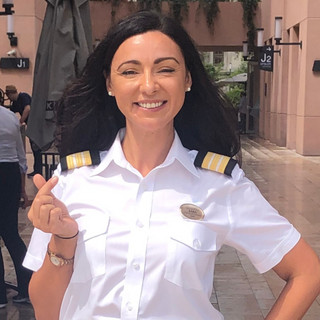
During my years aboard ships as a senior officer, I would
sit with post-cruise survey reports after each sailing.
The same phrases surfaced with remarkable consistency:
“The ship felt too crowded.”
“It was too big.”
“It was too small.”
“Not enough going on.”
“Too much going on.”
What struck us was never the complaint itself.
It was the mismatch.
Nothing had malfunctioned. The vessel had delivered exactly what it was designed to deliver.
But it had delivered it to the wrong guest.
Many times, reading those surveys, we would quietly ask:
Why did this sailing attract them in the first place?
Today, from land, I advise clients booking cruises strategically. And I see the same anxiety well before the decision is finalized:
Will this ship feel intimate or impersonal?
Will it feel calm or overstimulating?
Will it feel expansive or constrained?
Scale feels like the obvious variable.
It rarely is.
The irony is that this mismatch appears just as often on smaller, refined ships as it does on larger ones. Intimacy alone does not guarantee alignment. A ship can be beautifully designed, destination-focused, and thoughtfully scaled, and still feel wrong for the traveler who boards it.
Culture, pacing, and psychological fit matter more than tonnage ever will.
Why “Big vs Small” Is a False Frame
When passengers worry about ship size, they are usually worried about something else:
Social energy
Noise density
Queue friction
Entertainment volume
Dining flexibility
Visibility vs anonymity
Pace of days
Size is simply the most visible proxy.
Operationally, what actually determines your experience is:
Passenger-to-public-space ratio
Dining seat turnover timing
Tender capacity
Shore excursion throughput
Entertainment programming density
Cabin corridor distribution
Crew-to-guest operational structure
Two ships can both carry 2,500 guests and feel entirely different.
One may feel calm, spacious, and orderly.
The other may feel kinetic, compressed, and constantly in motion.
That difference is architecture, not scale.
What “Crowded” Actually Means On Board
When guests say a ship felt crowded, they usually experienced one of these:
Late port arrivals compressing disembarkation flow
Too many simultaneous main dining seatings
Popular venues under-sized relative to passenger interest
Sea days stacked back to back
Poor weather forcing indoor congregation
Boarding surges during embarkation
None of that is visible on a deck plan.
And none of it is explained in marketing copy.
The Real Risk: Cultural Mismatch
The deeper fear beneath “too big” or "too small" is this:
What if this ship doesn’t feel like us?
Cruise lines develop cultural signatures:
Some are high-energy, late-night, social.
Some are refined but structured.
Some are quiet but slow.
Some are polished but transactional.
Some are intimate but limited.
When someone books the wrong culture, they don’t feel mildly inconvenienced.
They feel alienated.
That is what drives regret.
And that regret lingers.
The Structural Lens
When I review a sailing, I’m not looking at marketing language or deck-plan aesthetics.
I’m applying operational judgment developed from inside the system.
I evaluate:
Passenger mix by itinerary
Historical occupancy patterns
Sea-day distribution and rhythm
Port density and recovery time
Tender logistics and throughput capacity
Dining layout and seating flow
Late departure frequency
Redundancy of key venues and public space
These variables reveal how a ship will actually function once on board.
They predict friction, energy level, crowd density, and cultural tone.
They allow me to interpret consequence.
That is what reduces regret.
If you’d like this level of analysis applied to a specific sailing you’re considering, you can begin a structural review here.
The Question You Should Be Asking Instead
Instead of:
“Is this ship too big?” or “Is this ship too small?”
Ask:
“What type of passenger does this ship reward?”
Some ships reward planners.
Some reward extroverts.
Some reward slow travelers.
Some reward structure-lovers.
Some reward spontaneity.
When you choose based on fit rather than scale, the anxiety drops immediately.
Because now the decision is interpretive.
Not cosmetic.
Final Thought
When guests wrote “too small” in surveys, they rarely meant scale.
They meant:
“This wasn’t designed for someone like me.”
Cruises don’t unravel because of geography.
They unravel because of alignment.
The difference between a sailing that feels seamless and one that quietly disappoints is rarely visible on a brochure. It lives in the structure beneath it.
If you’re considering a voyage and sense a hesitation you can’t quite name, that instinct is often correct.
It usually means the surface details aren’t telling the full story.
That layer - the structural layer - is where I work.
Vega Mare is a former senior cruise ship officer and the author of Inside the Floating City and The Discerning Voyager. If you are planning a significant cruise, or reconsidering one after a difficult experience, a strategy session will help you choose the right itinerary for where you actually are, not where the brochure suggests you should be.

Comments