Tender Ports Don’t Ruin Cruises. Misunderstood Logistics Do.
- Vega Mare
- Feb 26
- 2 min read
Updated: Mar 17
Few terms create more hesitation during cruise planning than “tender port.”
Passengers associate it with delay, congestion, and lost time ashore.
That anxiety is understandable.
What most travelers don’t realize is that tender experiences vary dramatically. One sailing may feel effortless. The next may feel compressed and stressful.
The difference is rarely luck.
It’s structure.
What a Tender Port Actually Is
A tender port means the ship is at anchor offshore and guests are transferred to shore via smaller vessels.
Operationally, this introduces capacity limits, sequencing, and weather dependency.
What determines your experience is not the existence of a tender.
It is:
Passenger load
Number of tender vessels
Priority sequencing
Excursion volume
Port call duration
These variables are rarely visible in booking interfaces.
Why Chaos Happens
Congestion at tender ports typically results from volume interacting with constraint.
Short port calls compress disembarkation windows.
High occupancy increases transfer demand.
Excursion sequencing concentrates early departures.
Weather reduces tender frequency.
None of this indicates disorder.
It reflects throughput limits.
On board, officers anticipate these variables carefully. Once a vessel is at anchor, the morning operation becomes a sequencing exercise. Timing errors compound quickly. The order in which guests are prioritized ashore is not random. It follows structured commercial and operational logic.
If you’re comparing itineraries and want this kind of structural analysis applied before you decide, you can begin a strategy review here.
When Tender Ports Work Beautifully
Tender operations can feel seamless when passenger flow aligns with capacity and timing.
Longer port calls reduce compression.
Staggered departures prevent surges.
Lower occupancy reduces bottlenecks.
In those conditions, tendering can even enhance the experience.
I’ve often described it as a miniature voyage layered into the larger one. In certain ports, approaching the coastline by small vessel allows you to experience scale and geography in a way docking never could.
Again, it is structure.
Not the concept itself.
The Psychological Trigger
The real concern is uncertainty.
Passengers want to know their time ashore will unfold as planned.
They worry about missed experiences, compressed mornings, and avoidable queues.
Those concerns are rational.
And they are assessable before booking when interpreted by someone who has worked within the system, not only traveled through it.
The Structural Questions to Ask
Instead of:
“Is this port tendered?”
Ask:
What is the ship’s occupancy on this itinerary?
How long is the port call?
How are disembarkation priorities structured?
What is the sequencing pattern for the day?
What are the historical environmental variables?
Those questions determine friction probability.
Final Thought
Tender ports are not inherently problematic.
They are structured environments with defined constraints.
When evaluated correctly before booking, they are predictable.
And predictability is what reduces uncertainty — and cruise regret.
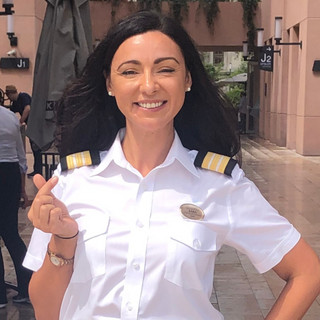
Vega Mare is a former senior cruise ship officer and the author of Inside the Floating City and The Discerning Voyager. If you are planning a significant cruise, or reconsidering one after a difficult experience, a strategy session will help you choose the right itinerary for where you actually are, not where the brochure suggests you should be.

Comments